Magritte Le Chateau Des Pyrenees
René Magritte’s entire body of work confronts its audience with a sense of uncertainty, forcing the individual to reconsider his position within a world where things are not as they seem. Magritte’s ‘Le château des Pyrénées’ reveals a castle constructed on a rock that casually hovers above a large body of water. However unlikely, the moat presents us with the ultimate conception of an impregnable fortress. How would you try to take this fortress?
© Succession René Magritte – SABAM, Belgium - 2019

The Artist
René Magritte
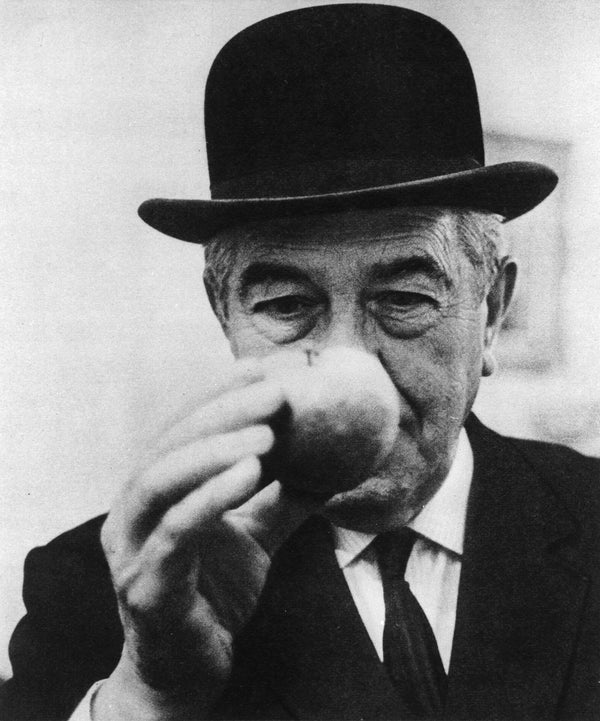
René Magritte (1898–1967) was a Belgian artist and one of the most influential figures of Surrealism. Known for his enigmatic paintings of bowler-hatted men, floating objects, veiled faces, and impossible landscapes, Magritte challenged the relationship between images, words, and reality. His precise, deceptively simple style gave familiar objects an uncanny presence, inviting viewers to question what they see and what they believe they understand.
Works such as The Treachery of Images, The Son of Man, and The Empire of Light have become defining images of 20th-century art. Through wit, mystery, and visual contradiction, Magritte developed a unique language that continues to influence contemporary art, advertising, design, and popular culture.