





Early Sunday Morning
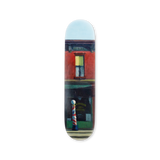
Early Sunday Morning (1930) is one of Edward Hopper’s most iconic paintings. Although he described this work as "almost a literal translation of Seventh Avenue," Hopper reduced the New York City street to bare essentials. The lettering in the window signs is illegible, architectural ornament is loosely sketched, and human presence is merely suggested by the various curtains differentiating discrete apartments. The long, early morning shadows in the painting would never appear on a north-south street such as Seventh Avenue. Yet these very contrasts of light and shadow, and the succession of verticals and horizontals, create the charged, almost theatrical, atmosphere of empty buildings on an unpopulated street at the beginning of the day.
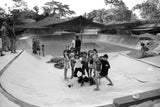
Early Sunday Morning is rendered by THE SKATEROOM as part of an open edition skateboard collection, officially licensed with Artist Rights Society (ARS) and the Whitney Museum of American Art. 10% of all revenue from this collection goes towards funding the incredible Cuba Skate and their recycled-plastic skatepark project.
© 2022 Heirs of Josephine N. Hopper/Licensed by Artists Rights Society (ARS), New York


The Artist