
English
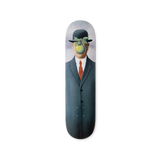
René Magritte's Le Fils De L'Homme skateboard art by the skateroom

Le fils de l'homme

About

Magritte’s ‘Le fils de l’homme’ was painted in 1964. An autoportrait, Magritte paints himself as a man clothed in a coat with a bowler hat, stood in front of a small wall, with the ocean and a cloudy sky sitting in the background. What strikes the viewer most about this painting, however, is the green apple that seemingly floats in the air while concealing a large part of the man’s face. Through the process of willfully obstructing ones view, Magritte sought to explore the tension that exists between plainly visible objects versus objects visible yet hidden. His claim: That we always want to see what it is hidden from us.
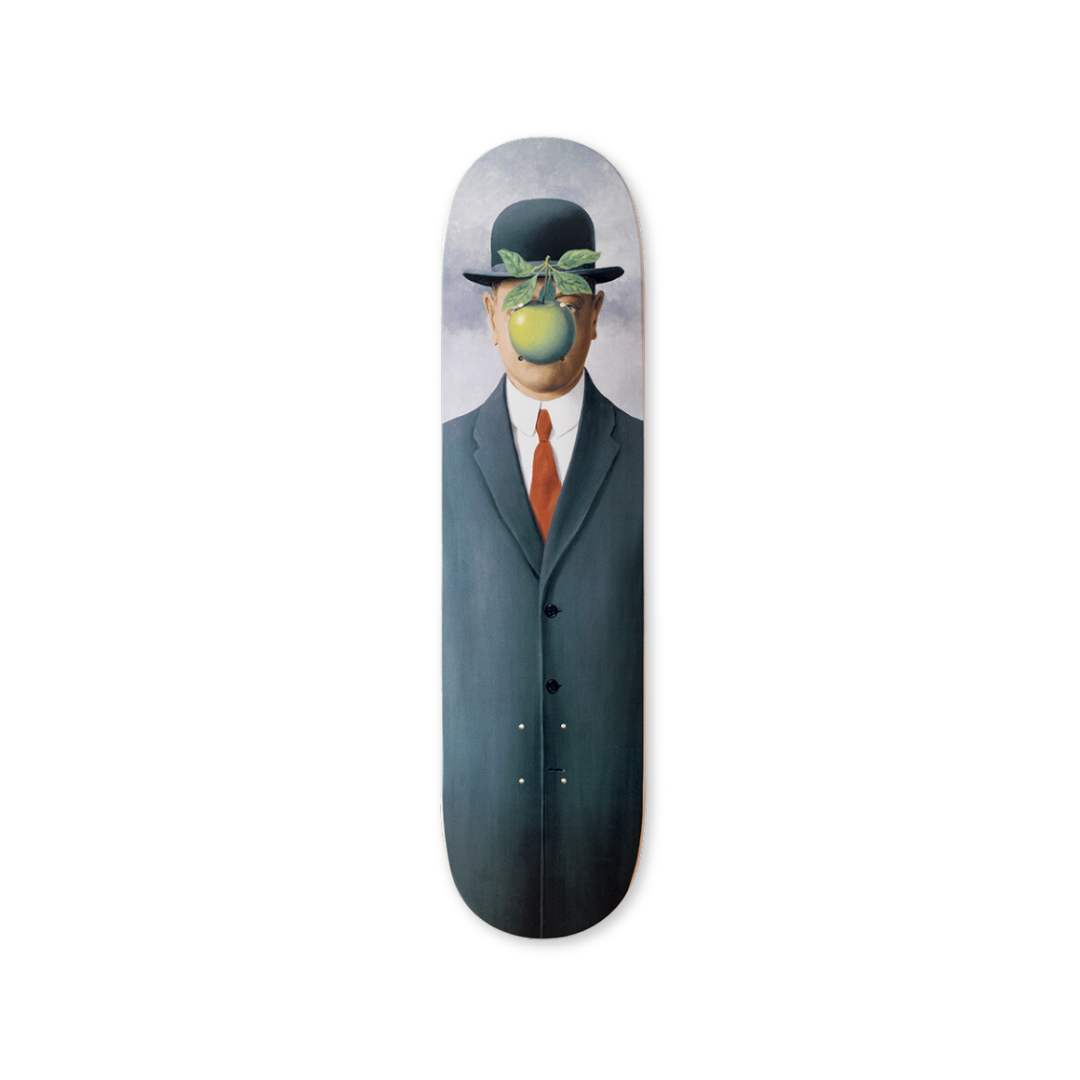
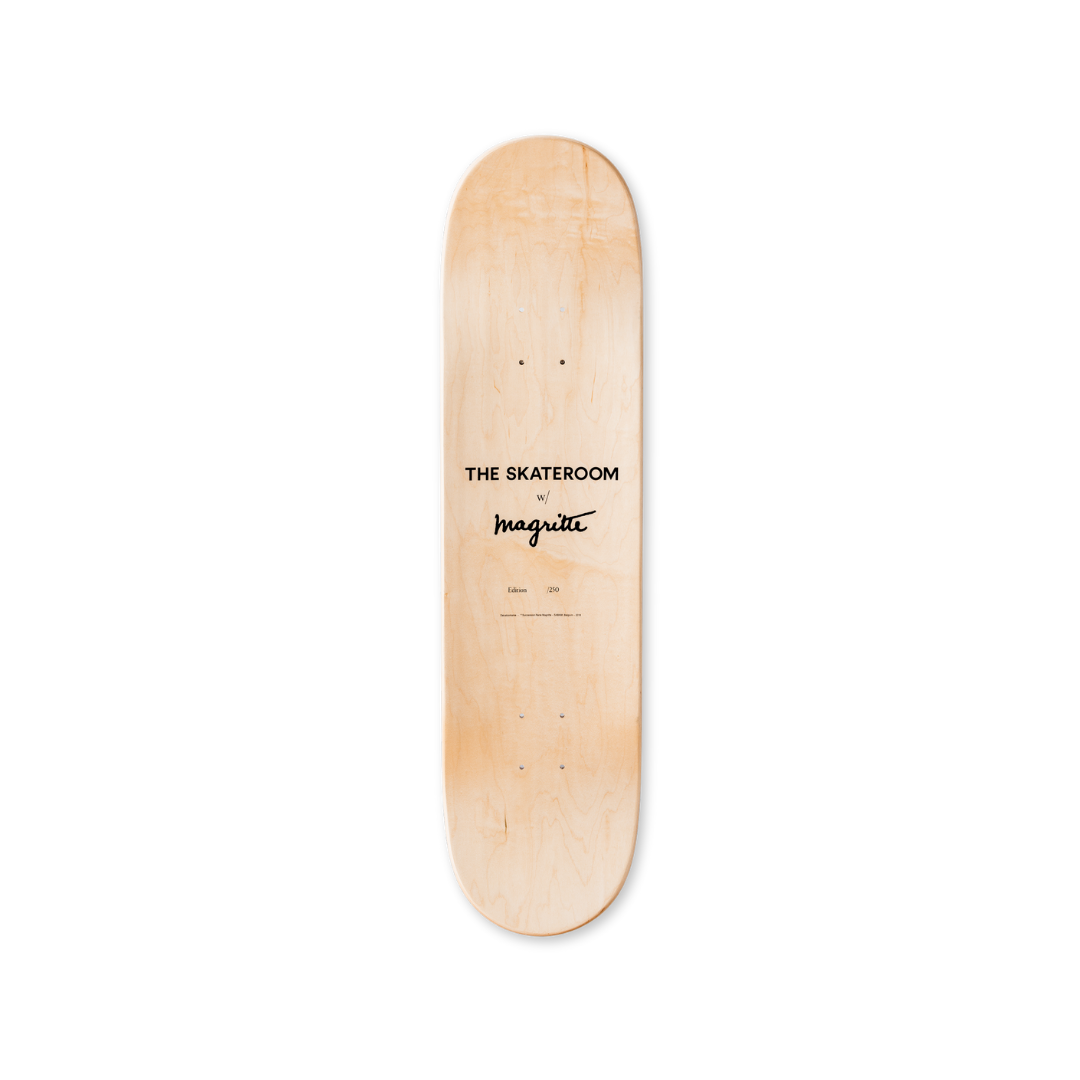
Quick view
René Magritte's Le Fils De L'Homme skateboard art by the skateroom
Quick view
René Magritte

The Artist

René Magritte

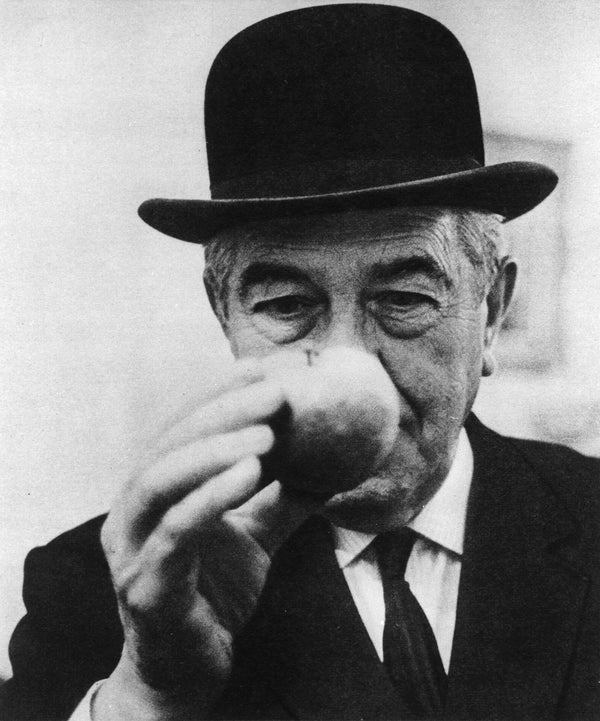
René Magritte (1898–1967) was a Belgian artist and one of the most influential figures of Surrealism. Known for his enigmatic paintings of bowler-hatted men, floating objects, veiled faces, and impossible landscapes, Magritte challenged the relationship between images, words, and reality. His precise, deceptively simple style gave familiar objects an uncanny presence, inviting viewers to question what they see and what they believe they understand.

Works such as The Treachery of Images, The Son of Man, and The Empire of Light have become defining images of 20th-century art. Through wit, mystery, and visual contradiction, Magritte developed a unique language that continues to influence contemporary art, advertising, design, and popular culture.