
français
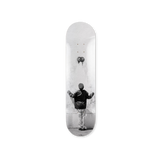
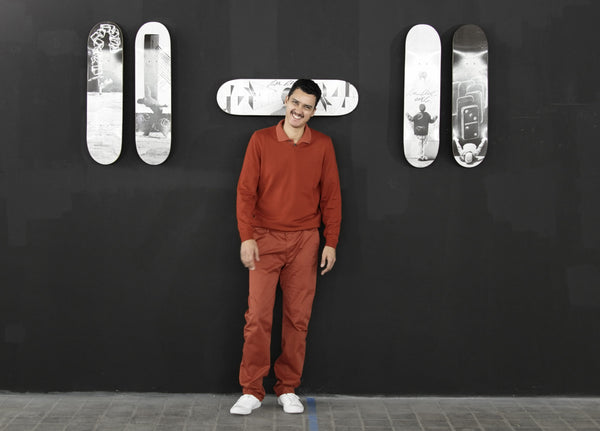
Robin Rhode's Juggla skateboard art by the skateroom

Juggla (Hand-signed)

Édition limitée de 15

À propos

Signé à la main par l'artiste
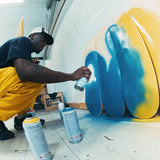
L'œuvre de Robin Rhode s'inspire d'un rite de passage pour les garçons à l'école. Son art, empreint de fantaisie, se présente comme un récit en deux parties. La première relate la conception et la création de l'œuvre par Rhode. Ces créations, influencées par le paysage urbain, trouvent souvent leur place sur les murs des villes et deviennent pour l'artiste un moyen d'interroger le public sur l'histoire de l'Afrique du Sud et ses difficultés sociales. La seconde partie prend la forme d'une performance entre un acteur et l'œuvre. À l'instar du rite de passage, cette interaction insuffle une nouvelle vie à l'œuvre et crée une dynamique secondaire à travers laquelle elle peut diffuser son histoire.

Vue rapide
Robin Rhode's Juggla skateboard art by the skateroom
Vue rapide
Portrait of Robin RHODE

About the Artist
Portrait of Robin RHODE

Robin Rhode (b. 1976, Cape Town) is a South African artist based in Berlin whose multidisciplinary work spans photography, performance, wall painting, and drawing. He transforms urban walls into stages: public murals are painted, then activated through choreographed performances, photographed in sequences that compress space, time, and narrative. His practice is deeply rooted in post‑apartheid experience, youth culture, and the dynamics of identity, power, and public space.

Robin Rhode (b. 1976, Cape Town) is a South African artist based in Berlin whose multidisciplinary work spans photography, performance, wall painting, and drawing. He transforms urban walls into stages: public murals are painted, then activated through choreographed performances, photographed in seq
MORE
×

Robin Rhode (b. 1976, Cape Town) is a South African artist based in Berlin whose multidisciplinary work spans photography, performance, wall painting, and drawing. He transforms urban walls into stages: public murals are painted, then activated through choreographed performances, photographed in sequences that compress space, time, and narrative. His practice is deeply rooted in post‑apartheid experience, youth culture, and the dynamics of identity, power, and public space.