

français
Andy warhol skull blue solo THE SKATEROOM bottom

Crâne bleu

À propos
THE SKATEROOM, en collaboration avec la Fondation Andy Warhol pour les arts visuels, présente une édition limitée à 100 exemplaires reprenant la série Skulls d'Andy Warhol. Créée entre 1976 et 1977 à la Factory, l'atelier new-yorkais d'Andy Warhol, la série Skulls présente l'image d'un crâne humain posé à plat. Elle s'inspire d'une photographie en noir et blanc prise à l'origine par un assistant de Warhol. Suivant les instructions de ce dernier, l'assistant a réalisé des clichés en jouant sur les ombres et les contrastes de lumière. De ce fait, le front et les pommettes ressortent avec éclat, tandis que les orbites et autres creux créent un vide profond qui interpelle le spectateur. La vivacité des couleurs employées contraste fortement avec l'intensité du sujet. La série Skulls , comme la majeure partie de l'œuvre d'Andy Warhol, se prête à une interprétation ambiguë. Certains historiens de l'art ont établi un lien entre ces œuvres et la tentative d'assassinat dont Warhol a été victime en 1968, suggérant une obsession de la mort suite à cet événement. Pourtant, dans son ouvrage La Philosophie d'Andy Warhol (1975), Warhol lui-même affirmait : « Je n'y crois pas, car vous n'êtes plus là pour savoir que c'est arrivé. Je ne peux rien dire à ce sujet, car je n'y suis pas préparé. »
Vue rapide
Andy warhol skull blue solo THE SKATEROOM bottom
Vue rapide
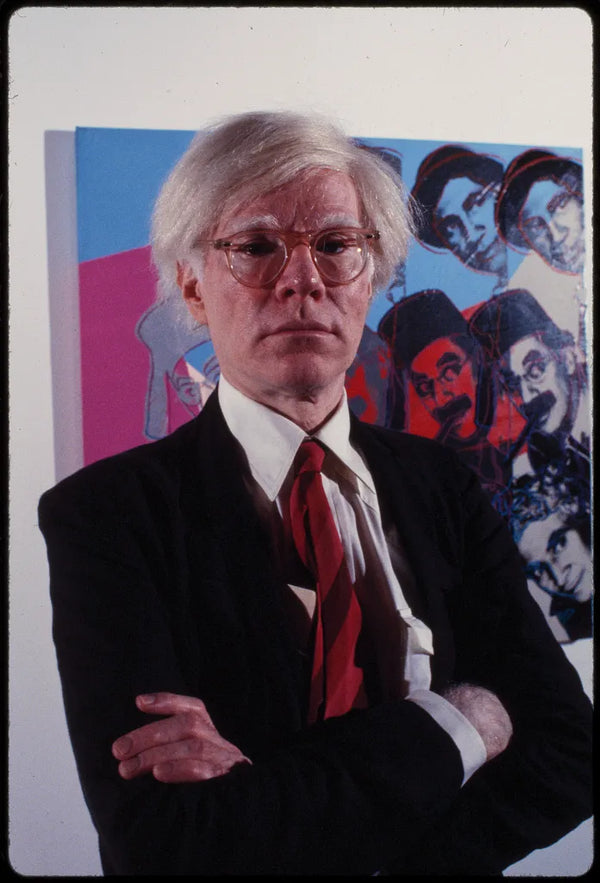
Portrait of Andy WARHOL

About the Artist

Portrait of Andy WARHOL

Before assuming his place in history, Andy Warhol (1928-1987) as a commercial illustrator in New York for over a decade. Although he began painting in the late 1950s, he emerged into the spotlight in 1962 when he exhibited wooden replicas of Brillo soap pad boxes, along with paintings of Coca-Cola bottles, and his infamous Campbell’s soup cans. Warhol’s mass-producing silkscreen technique was key in reducing his depictions into insipid and dehumanized cultural icons that reflected the alleged emptiness of American material culture, along with Warhol’s own emotional withdrawal towards his creations. Eventually, Warhol’s work propelled him to the forefront of the emerging Pop art movement in America.

Before assuming his place in history, Andy Warhol (1928-1987) as a commercial illustrator in New York for over a decade. Although he began painting in the late 1950s, he emerged into the spotlight in 1962 when he exhibited wooden replicas of Brillo soap pad boxes, along with paintings of Coca-Cola b
MORE
×

Before assuming his place in history, Andy Warhol (1928-1987) as a commercial illustrator in New York for over a decade. Although he began painting in the late 1950s, he emerged into the spotlight in 1962 when he exhibited wooden replicas of Brillo soap pad boxes, along with paintings of Coca-Cola bottles, and his infamous Campbell’s soup cans. Warhol’s mass-producing silkscreen technique was key in reducing his depictions into insipid and dehumanized cultural icons that reflected the alleged emptiness of American material culture, along with Warhol’s own emotional withdrawal towards his creations. Eventually, Warhol’s work propelled him to the forefront of the emerging Pop art movement in America.