



français
Andy warhol dollar sign 9 solo A bottom by the skateroom
Dollar sign (9) Solo A, 1982

Dollar sign (9) Solo A, 1982

À propos

Que signifie la présence du symbole du dollar ? Une soif d’argent, peut-être. Mais combien de temps avant que ce symbole ne perde tout fondement dans la réalité ? Les « Dollar Bills » de Warhol, série marquante de 1961, ont été revisités vingt ans plus tard par l’artiste, qui a accentué l’élégance du symbole du dollar. On retrouve ici la technique de Warhol consistant à répéter inlassablement la même iconographie, jusqu’à en déconstruire, voire en transformer, le sens. Pour nous, cela soulève la question : comment mieux dépenser notre argent, pour avoir un impact positif ? Nous vous laissons y réfléchir. Édition spéciale skateboard sous licence. ©/®/™ The Andy Warhol Foundation for the Visual Arts, Inc.

Vue rapide
Andy warhol dollar sign 9 solo A bottom by the skateroom
Dollar sign (9) Solo A, 1982
Vue rapide
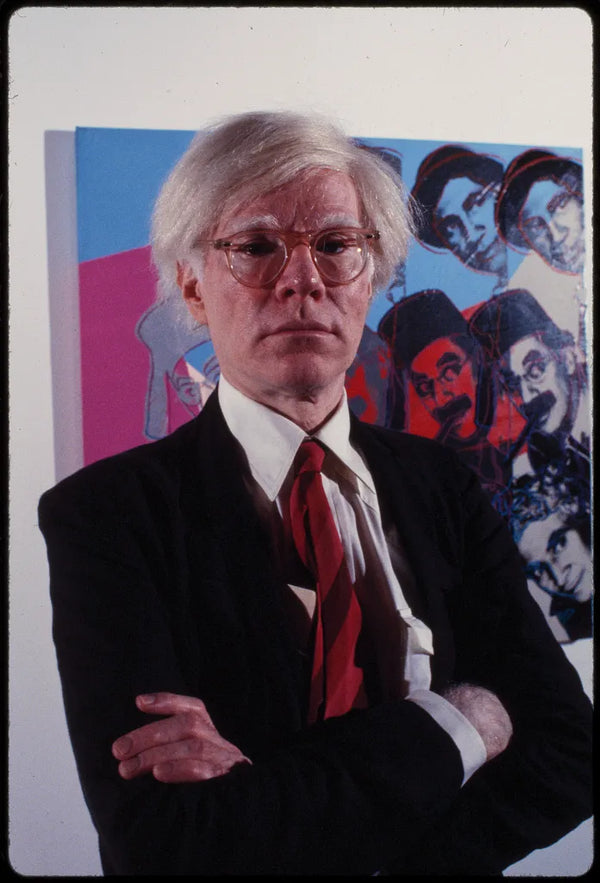
Portrait of Andy WARHOL

About the Artist

Portrait of Andy WARHOL

Before assuming his place in history, Andy Warhol (1928-1987) as a commercial illustrator in New York for over a decade. Although he began painting in the late 1950s, he emerged into the spotlight in 1962 when he exhibited wooden replicas of Brillo soap pad boxes, along with paintings of Coca-Cola bottles, and his infamous Campbell’s soup cans. Warhol’s mass-producing silkscreen technique was key in reducing his depictions into insipid and dehumanized cultural icons that reflected the alleged emptiness of American material culture, along with Warhol’s own emotional withdrawal towards his creations. Eventually, Warhol’s work propelled him to the forefront of the emerging Pop art movement in America.

Before assuming his place in history, Andy Warhol (1928-1987) as a commercial illustrator in New York for over a decade. Although he began painting in the late 1950s, he emerged into the spotlight in 1962 when he exhibited wooden replicas of Brillo soap pad boxes, along with paintings of Coca-Cola b
MORE
×

Before assuming his place in history, Andy Warhol (1928-1987) as a commercial illustrator in New York for over a decade. Although he began painting in the late 1950s, he emerged into the spotlight in 1962 when he exhibited wooden replicas of Brillo soap pad boxes, along with paintings of Coca-Cola bottles, and his infamous Campbell’s soup cans. Warhol’s mass-producing silkscreen technique was key in reducing his depictions into insipid and dehumanized cultural icons that reflected the alleged emptiness of American material culture, along with Warhol’s own emotional withdrawal towards his creations. Eventually, Warhol’s work propelled him to the forefront of the emerging Pop art movement in America.